

What does myrrh smell like and why you love it
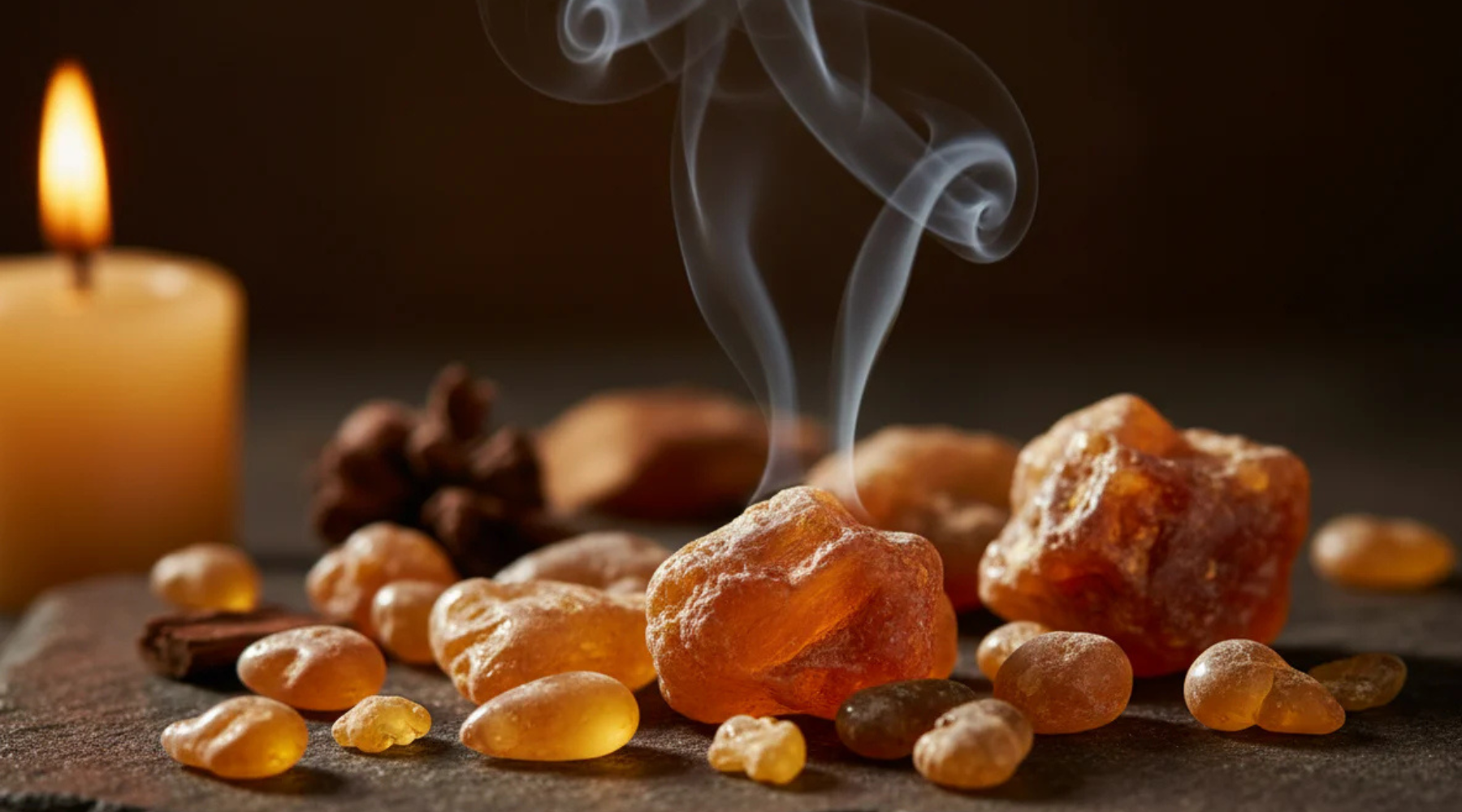
What does myrrh smell like and why you love it more than you know.
There's a reason certain fragrances feel like a memory before you've even finished the first spritz. Warm. Slightly smoky. Safe in a way that has nothing to do with being boring. If you've ever reached for a scent and couldn't quite name what made it feel so intimate and what gave it that pull, there's a good chance you were smelling myrrh.
Most people don't know they love myrrh. They just know they keep coming back to certain fragrances and can't fully explain why.
What is myrrh, exactly?
Myrrh is a natural resin: a dried sap harvested from Commiphora trees native to northeast Africa and the Arabian Peninsula. It's been used for thousands of years in religious ritual, traditional medicine, and perfumery. Ancient Egyptians used it in embalming. The Magi brought it to Bethlehem. Cleopatra almost certainly had some.
In modern perfumery, myrrh is used as both a heart note and a base note, depending on how it's extracted and blended. Its natural constituents (particularly a compound called curzerene) give it that distinctive quality: balsamic but not sweet, resinous but not heavy, smoky but not charred.
What does myrrh actually smell like?
If you've never consciously smelled myrrh on its own, your best reference point is probably incense but warmer and less austere than the church variety. Think of something between amber, woodsmoke, and the inside of an old bookshop. There's a slight bitterness at first, almost medicinal, that softens on skin into something much more intimate.
In fragrance blending, myrrh does something most other ingredients can't: it makes a scent feel lived-in. It's why certain perfumes smell like they've already been worn, like the warmth of someone you know. That quality isn't an accident. It's myrrh.
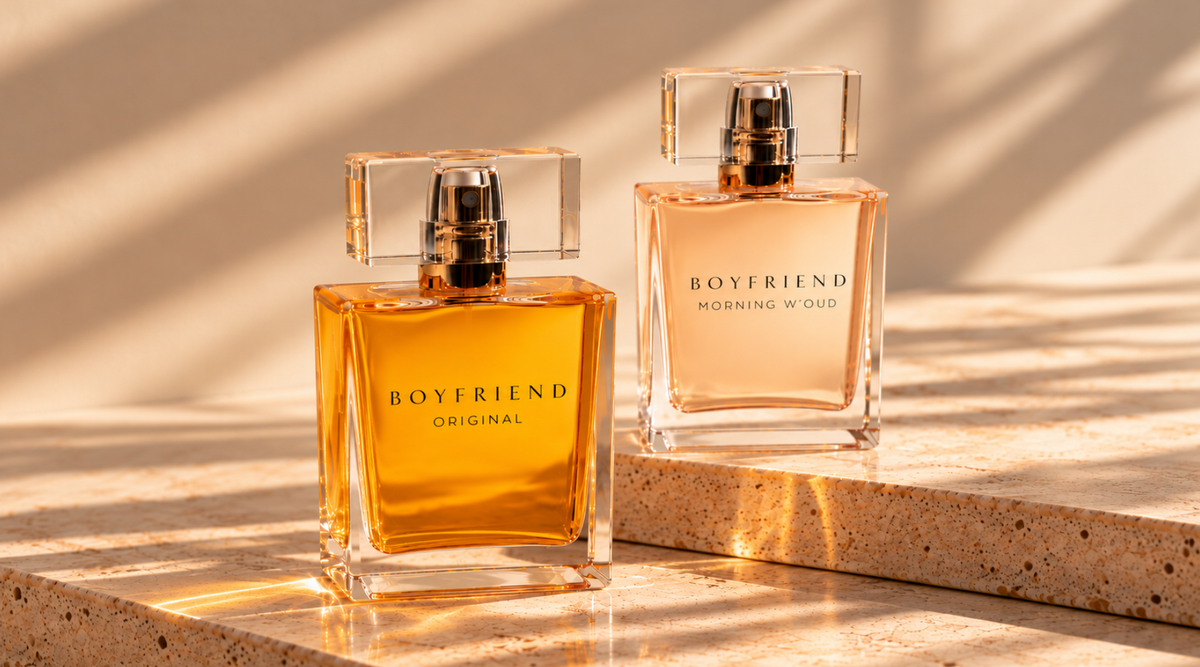
Paired with dark fruits, like the juicy plum in Original Boyfriend, myrrh deepens without darkening. It's the reason Original has that warm, almost-spicy undertone that most people describe as "sexy" without being able to pinpoint exactly why.
Why myrrh works so well on skin?
Unlike synthetic musks, which tend to project away from the body, myrrh leans in. It has an affinity for skin's natural chemistry that makes it behave differently on everyone who wears it which is exactly the quality that drew Kate Walsh to it when she was building the Boyfriend fragrance. She didn't want a perfume that announced itself from across a room. She wanted one that made people lean in closer.
Myrrh also has unusual longevity. As a base note, it lingers well past the point where lighter ingredients have faded which is why an Original Boyfriend wearer often notices the scent still present hours after they've stopped noticing it consciously. Their skin has just absorbed it.
Who myrrh is for?
If your fragrance wardrobe tends toward warmth over freshness, toward evenings over mornings, toward complexity over brightness, myrrh is almost certainly already part of what you love. You've just been calling it by the name of the perfume.
It's particularly striking in colder weather, when the resinous quality blooms rather than burns off. If you've ever noticed that certain perfumes smell completely different in autumn than they do in July, myrrh is usually part of the explanation.
Not sure if myrrh is your note? The easiest way to find out is to try it on skin, not paper. The Boyfriend Original Sampler is the lowest-stakes way to do that. Just pay shipping and get 15% off your first full-size bottle if you fall for it. Which you probably will.
Comments